Saturday, August 05, 2006

Return to Spain

After having such a great time in Spain at Easter, we planned a return trip in August. The main action on the expedition was the continued exploration of the new cave from Easter 'El Torno'. While on a trip into a new area of this cave to push and survey some passages which nobody had every been in (or so we thought!), another team from the expedition came across a human skull!


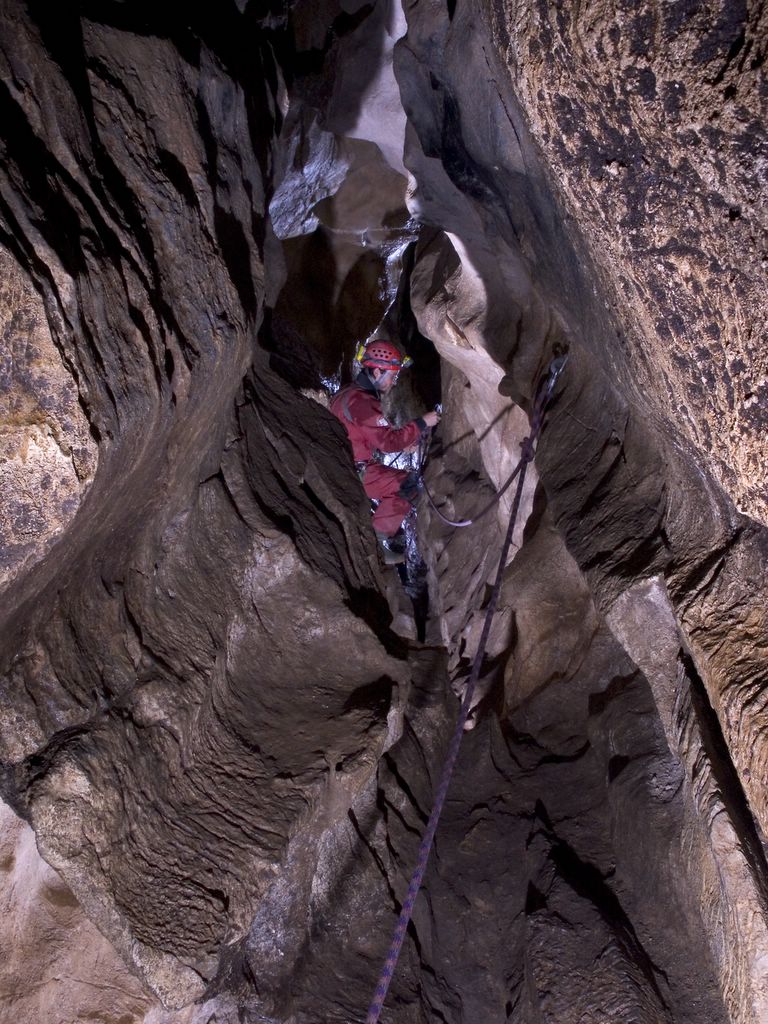
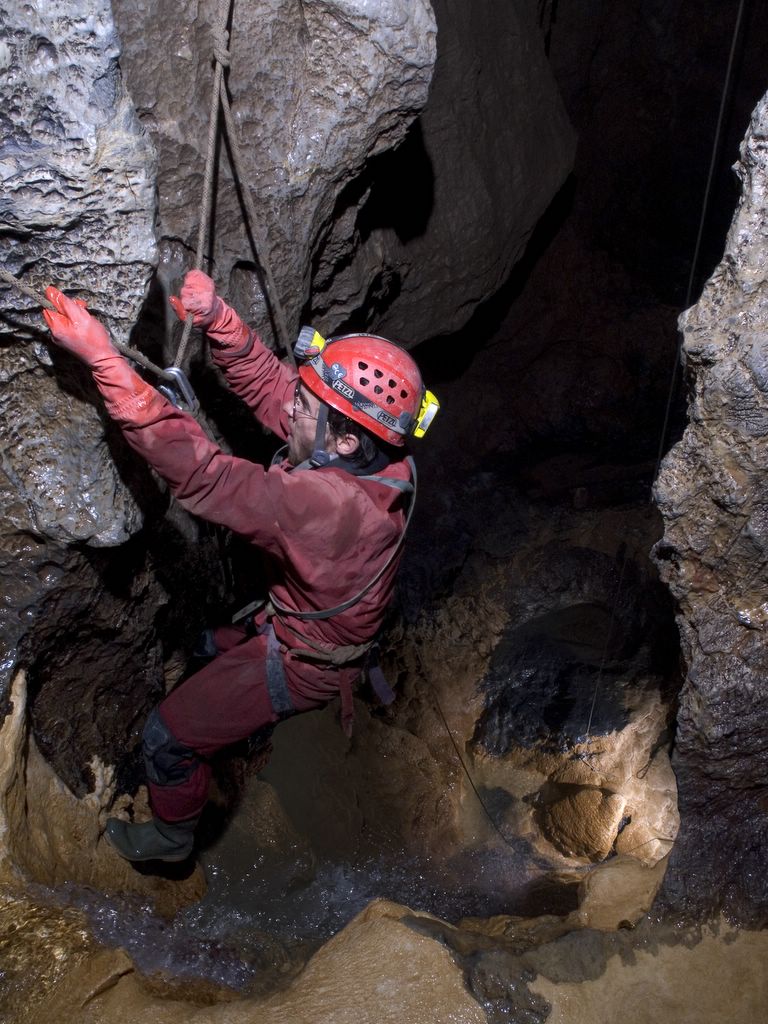
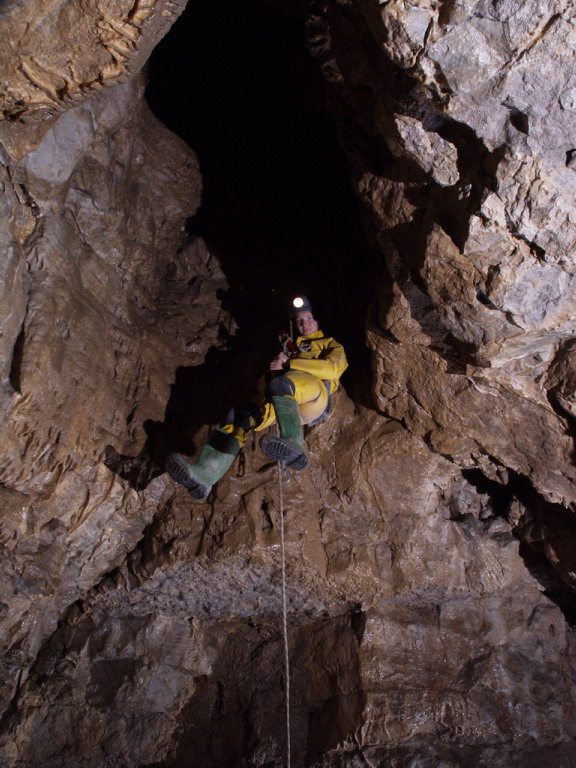
This is a climb up in the new area of passages which led to the passage where the skull was found. This section of cave had been named 'Granny's Slippers' after the first team to explore here found the mud built up on their boots like a big pair of Granny slippers.


The human skull, which became affectionately known as Granny. From what I understand from a purely amateur viewpoint is that it is likely to be very old because the teeth appear worn down but with no sign of decay (indicating this person dates from a time before sugar was part of the European diet). The surveying compass was included for scale. The skull will be excavated by an archeologist in due course.


We found some other bones nearby. These do not appear to be all human (but I'm no expert). Certainly an animal jawbone (small mammal) and a skull (dog sized) were also present (but not visible in this photograph). They are partly calcited into the cave formations, indicating they have been here a very long time.


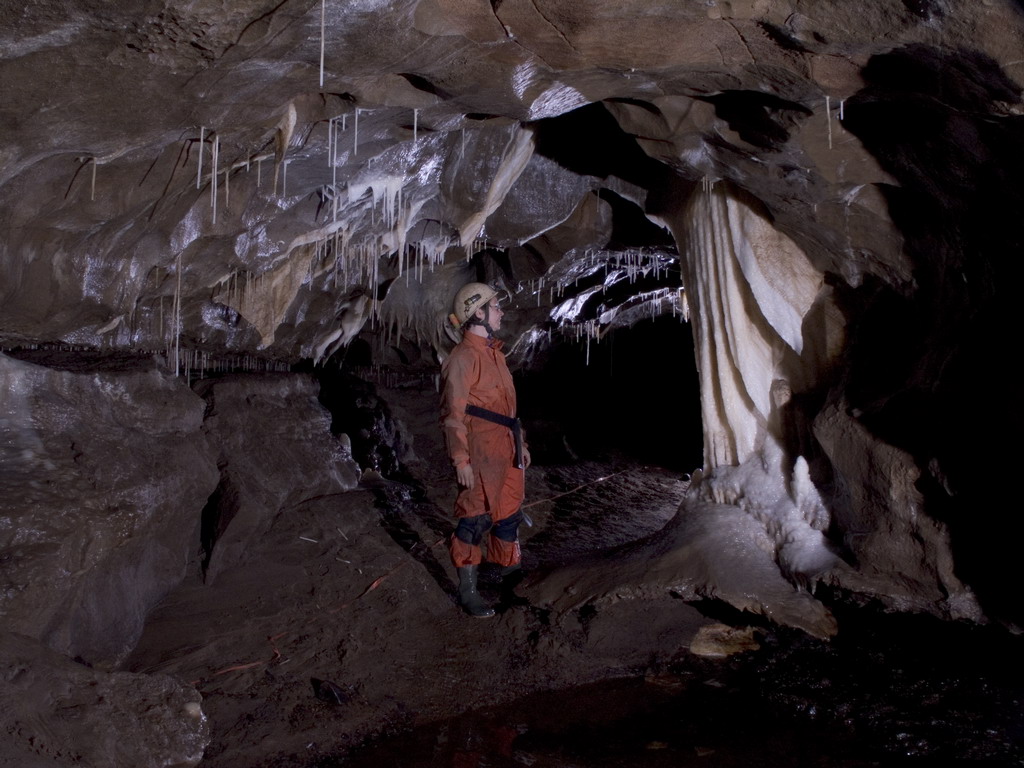
The photo above shows where the bones in the previous picture were found. They are among the formations on the passage floor in front of the caver. Another set of formations hang over the top, so the bones can't have fallen in from above. Either they were moved here by an animal, or were washed in when water flowed in this ancient passage.


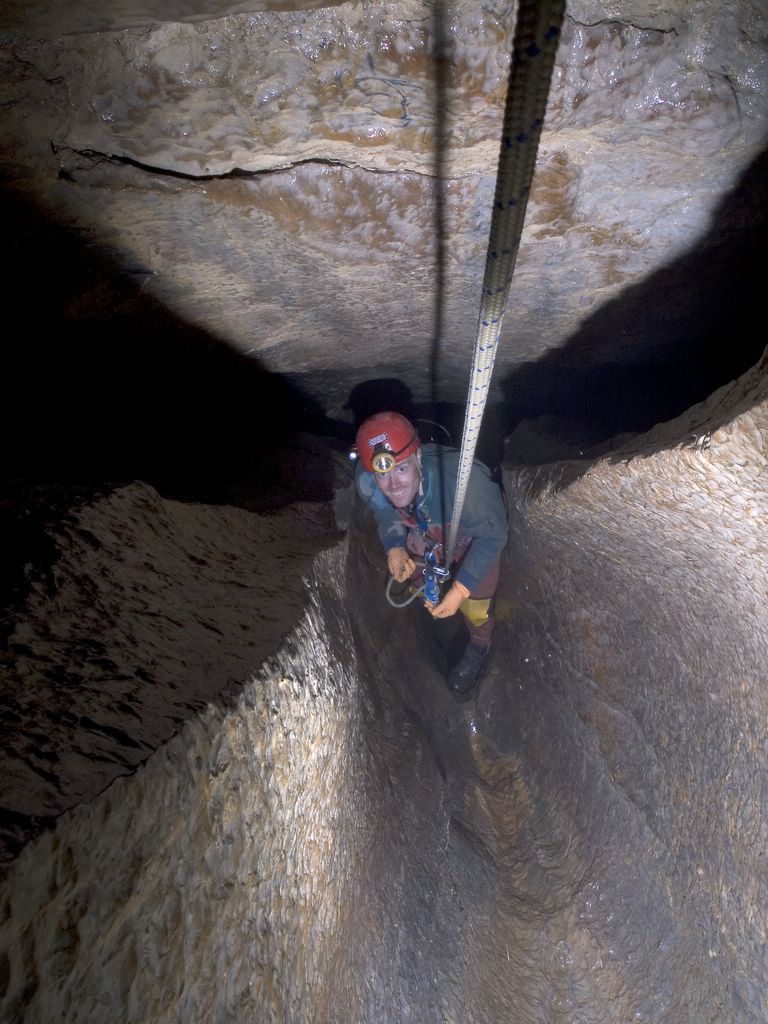
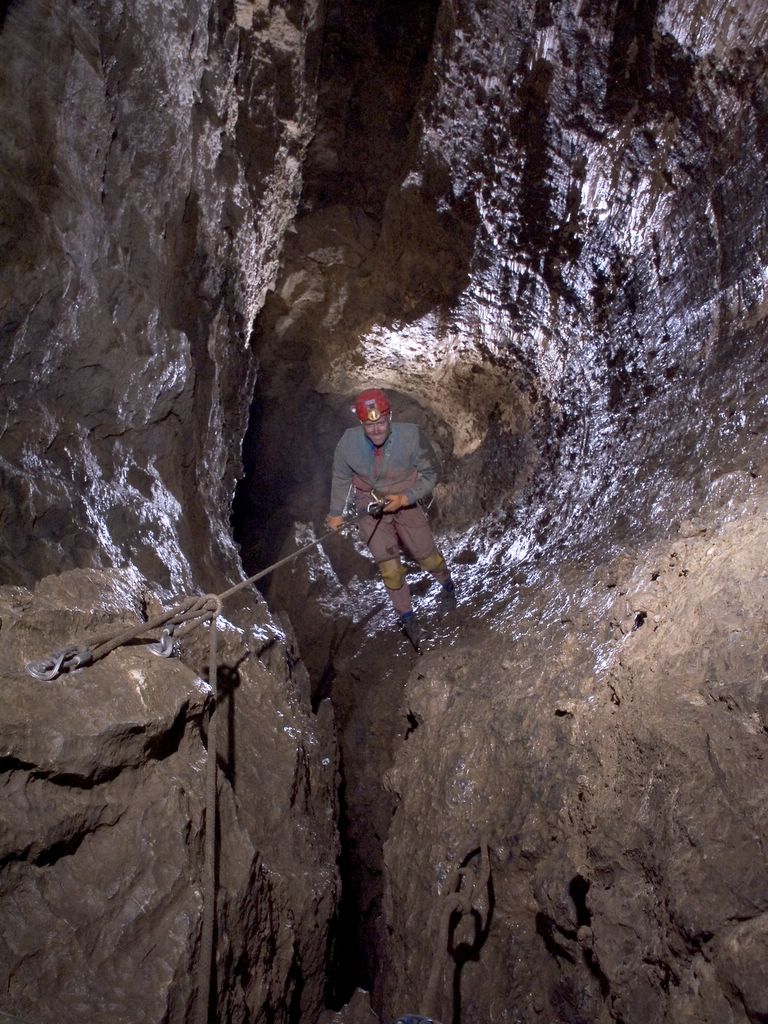
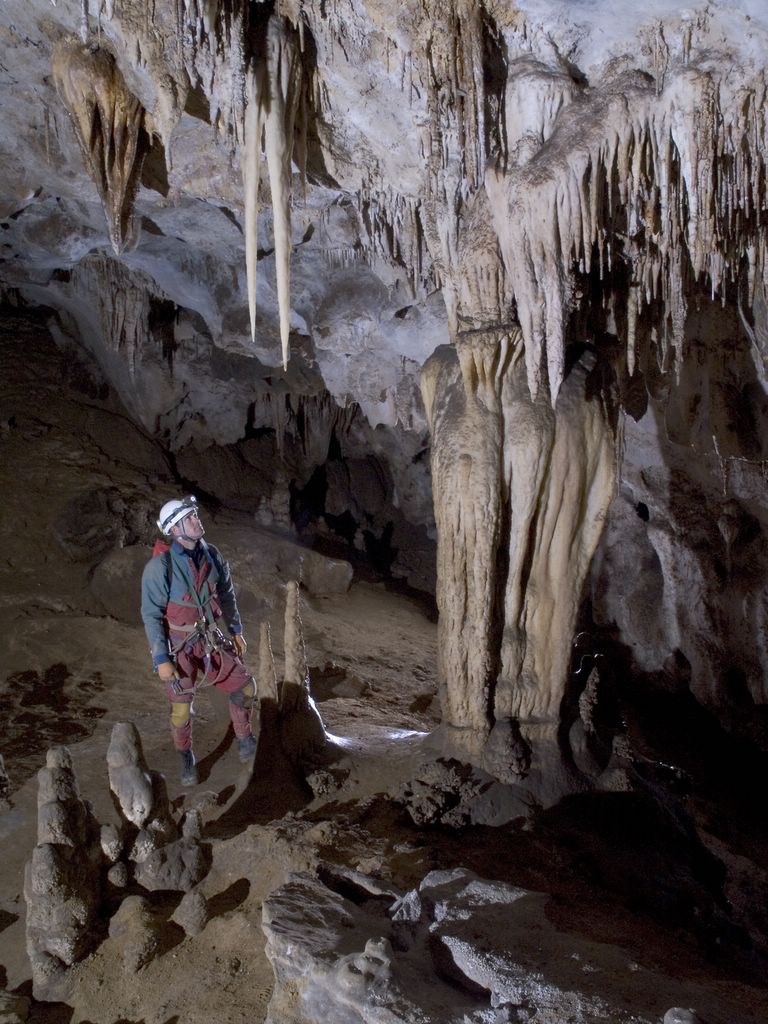
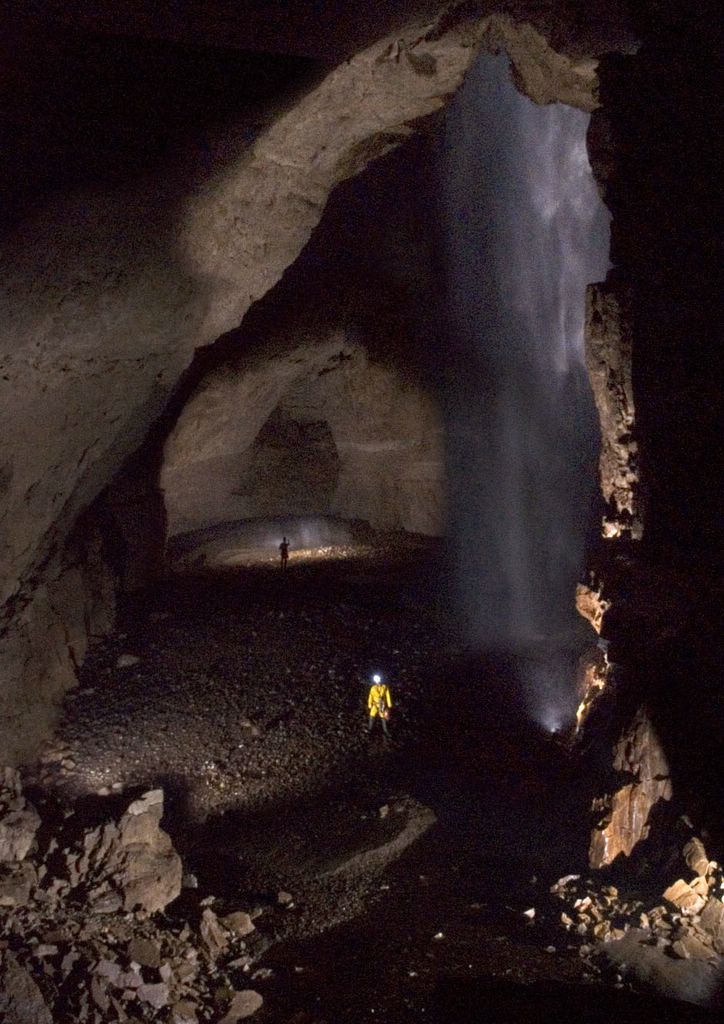
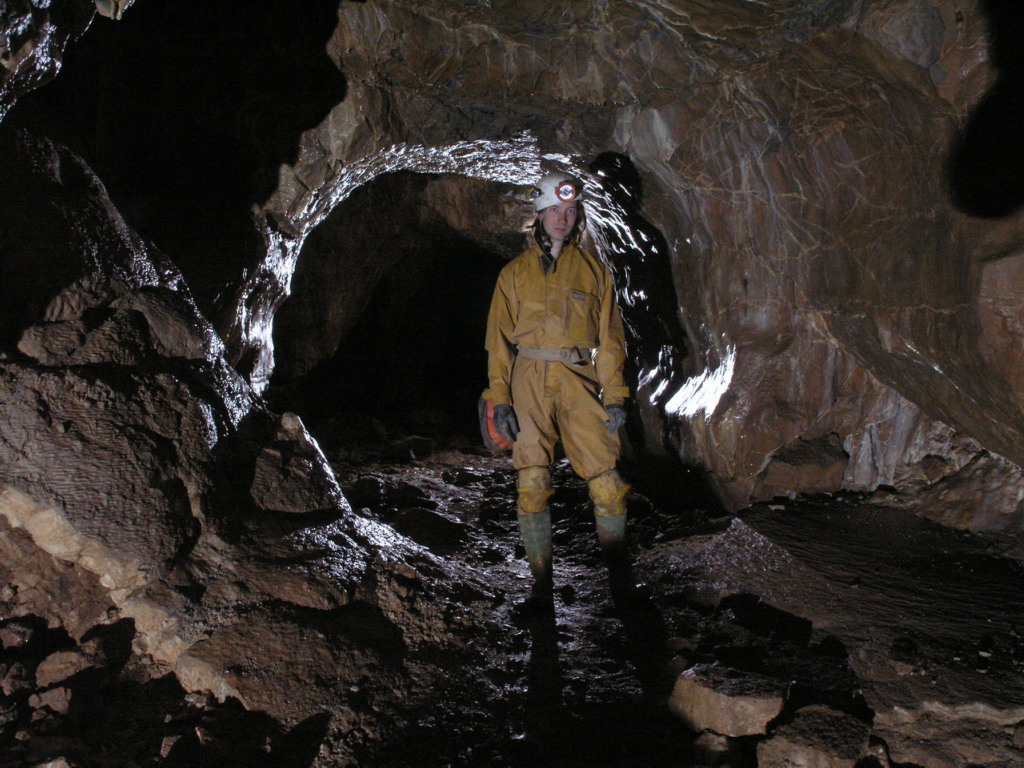
This cave features an amazing variety of passage styles in a relatively short amount of cave. This passage is near the entrance of the cave. The new passages were found beyond the chamber discovered on the Easter expedition.


Just in case you thought it was all hard work. Some of the caving was very relaxing!

Saturday, June 17, 2006

Fly-Cave Weekend in the Felix Trombe

A trip which was nearly two years in the planning came together this month. A group of nine of us flew over to France for a long weekend to explore the further reaches of the Grotte de Pene Blanque. The plan was to spend 4 days (3 nights) underground, camping a good few hours into the cave so that we could make a trip to the far end of the system and have plenty of time to take photographs. This also solved any accommodation problems, and saved the weight of carrying tents. The trip was a great success, and we were amazed by the cave formations which we found. We had no idea the cave contained such stuff, so it was a real surprise. Here are a few highlights.


The great Blanc de Blanc column. This extends a further 60m or more down a shaft behind the column.


A large crystal pool in a room with a completely crystal floor.

The caver here is standing by the entrance to this amazing room


A wider view of the chamber with the crystal pool in the foreground


On the third day we went exploring in another part of the cave and found these hair raising cable traverses over gaping black chasms. The floor is about 60m down!

Saturday, April 29, 2006

Cave Exploration in Spain

Spent a week over Easter on a caving expedition in Cantabria, Northern Spain in the Matienzo valley. This is the first time I have tried to take all my cave photography gear abroad via budget airline, but it proved possible due to the unlimited weight hand luggage policy of Easyjet. We just about managed to fit our caving, camping and photographic gear into our baggage allowance and had a fantastic week hunting for new caves and searching for new passages in known caves.

The Matienzo expeditions have been running for well over 30 years, and details of the discoveries in the area can be found on the Matienzo Expedition Website.

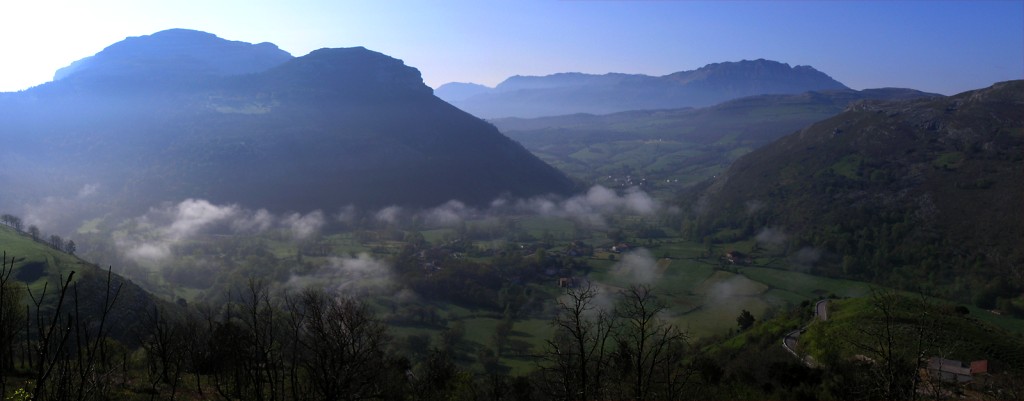
I took a lot of record photographs of cave entrances and surface features, but also managed to get some nice landscape pictures and a few underground pictures of some of the new discoveries during the week. This was the first time I have tried my hand at panoramic pictures, both above and below ground. The views down on the valley lent themselves well to this format, as did one of the major cave discoveries. I took several frames of each of these scenes, and then used Adobe Photoshop to create the composite images from the best matching ones. Each of the images below is made up from three actual photographs.


Early morning cloud in the Matienzo valley

Cave chamber in the newly discovered Cueva del Torno

Saturday, October 01, 2005

Underground in Mendip

Invited to Mendip as a guest at the BEC 70th anniversary dinner, we took the chance to take the camera gear underground in Mendip for the first time. We decided on GB Cavern as it is easy and has plenty to photograph. We did not want to go somewhere that presented a risk that we might miss the dinner!

We were guests of my friends and long time BEC members Gary & Steve, who first introduced me to caving back in 1988. Steve had wanted to try and get a good photograph of the rock bridge in the main chamber of GB, so we focused our attention on this. It is a difficult subject because it can look very small when photographed from above, but has the huge black void of main chamber behind it. From below it looks larger, but the passage beyond is hidden by the bridge itself, due to the steep slope of the chamber floor. In both instances, the bridge tends to blend into the background if not lit carefully. Here is one of the better shots I took.


The Bridge, GB Cavern

Monday, September 26, 2005

Hidden Earth Photography Salon Portfolio

Spent the weekend at the annual UK caving conference Hidden Earth where I am usually to be found organising the photography salon and competitions. I had 3 weeks to sort out my pictures from France and just about got a half decent set of 5 prints together to enter. The salon was a great success this year with around 100 prints entered and a very high standard of work. I realised my pictures were not up to the mark when I saw the other competition entries, which was both disappointing but also inspiring. I still need to improve if I am going to win any prizes next year.

Here are the 5 pictures I entered.


Paul Dold on 3rd Pitch in the Trou du Vent

Martin Jahnke Rigging in the Gouffre Raymonde

Paul Dold on the 2nd pitch, Gouffre Raymonde

Martin Jahnke descending a pitch in the Gouffre Raymonde streamway

Formations in the Salle du Bivouac, Grotte de Pène Blanque

Saturday, September 03, 2005

Fantastic Trip to the Felix Trombe

Back from the French Pyrenees after a superb couple of weeks. Lots of photos to sort out. Took over 500 underground in various caves that are part of the Felix Trombe system. One of my main objectives was to get a good photograph of the impressive great chamber in the Trou du Vent. In total we took around 45 frames in the chamber which I can use to build up a composite image to show the whole scene. Here is a quick sample frame to give you an impression of the place.


Grand Salle (Big Chamber) of the Trou du Vent

Friday, August 12, 2005

Preparations for Caving Photography Holiday

I've been very busy these past few months preparing for my Summer holiday trip to photograph parts of the Felix Trombe cave system in the French Pyrenees. Most of the work has been in creating laminated maps for underground and entrance location, but I have also been building slave units (using kits from David Gibson: Caving Flashgun Slave) and converting Metz hammerhead flashguns to run off high capacity NiHM batteries. I have 4 flashguns with slaves, plus a couple of smaller guns for smaller places. I hope to have some pictures to post here in September.

Sunday, July 17, 2005

Pipikin Pot Extreme Photo Trip

You know how cave photographs nearly always make it look fabulous? Formations hang from every place on the ceiling and floor. The caver stands in a grand cavern admiring the magnificent scene. Well there is another side to caving, which is rarely seen in photographs. My friend 'Beardy' was recently complaining at the lack of 'proper Yorkshire potholing' photographs on the internet, as he was trying to show some cavers from overseas what good sport the caves of Yorkshire offer. So we took him up on this, and invited him to join us for a photo trip down Pipikin Pot, a classic tight Yorkshire Pot.

The trip was a lot of fun (and mild pain in places!) and a good test of the robustness and easy of carrying of my photographic gear. I had to use all the flashguns on auto in order to limit their brightness, and even then I found pictures were burned out if I could not get at least 2 metres (~6ft) away from the subject. I definitely must adapt my slave units so I can fit them to different flashguns. I was able to take the pictures on the slowest film speed equivalent setting and darkest aperture, giving both low noise and excellent depth of field. In some pictures my cows tails (rope safety tethers attached to my harness) sneaked into the frame, and remained in focus despite me aiming at a subject up to 4 metres away.


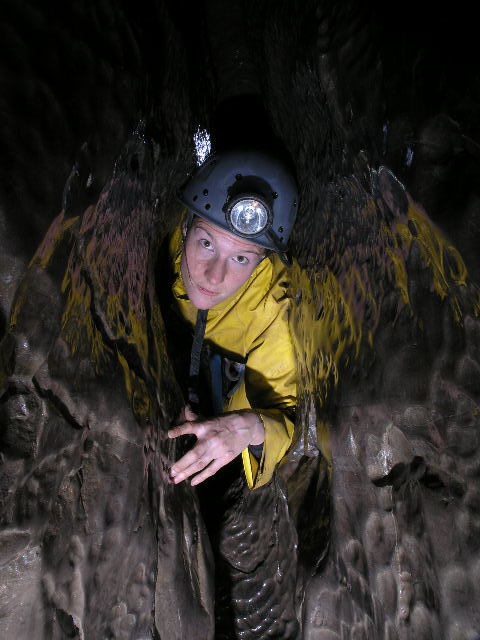
Caroline (my wife) in a squeeze


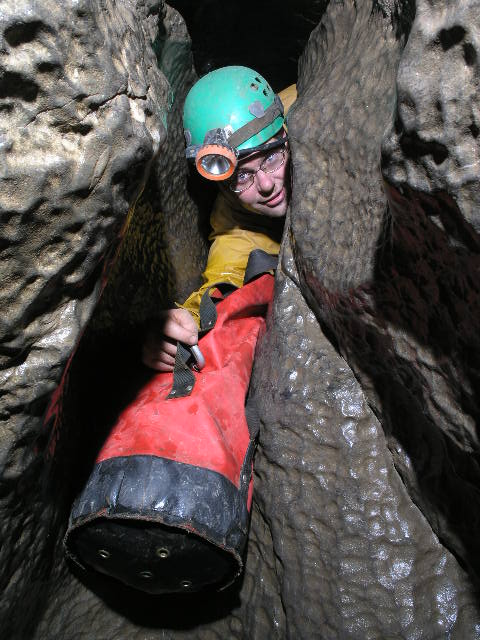
Paul Swires 'Beardy' enjoying every moment of it!

Monday, April 25, 2005

Photography Trip in Notts II

Spent Saturday on a photography trip to Notts II, which I had not visited before. This was a much less ambitious trip than our attempt to photograph Gaping Gill main chamber a couple of weeks ago, and proved very successful. A really beautiful cave which I was only able to photograph (and visit) a small proportion of because we had to be out in time for our club annual dinner that evening. A return visit is planned!

Having learned from the Gaping Gill experience, I put the flashguns in zip-lock food bags to keep them dry. This caused some problems in that it was difficult to turn the dials on the top to set the auto modes, and also because the light appeared to reflect around the inside of the bags enough to fool the auto sensor into thinking the correct exposure had been achieved before enough light had been emitted. So pictures taken with the flashes on auto were completely under-exposed. I had to use them on manual, which stopped me getting pictures in smaller spaces due to the brightness being too much for the camera. I was able to use a low ISO setting and stop the aperture right down for excellent depth of field and low noise in the pictures, but the flashes had to be at least 6 feet away from the subject, and this was not possible in the confines of the scaffolded entrance shaft.

I took all the pictures on the lowest ISO settings I could get away with, after the problems with noise in the Gaping Gill pictures. One of the flash gun batteries failed early again. The Metz NiCad pack is just old and past it. I have converted the AA cell battery pack from the other flash to take NiMH rechargeable cells, and this lasted the whole trip. I think I will be cutting open the NiCad pack and replacing the cells in that with AA NiHM cells now. The slaves attached to the flashes were constantly being triggered by our cap lamps, which nearly blinded me when I was putting one flash face up on a rock and it went off about 2ft in front of my face! I think the LED lamps we are using these days are far more prone to triggering the slaves, as we never used to have big problems in the past. This was one reason why the old NiCad battery pack ran down. Then every time we got it to recharge the flash ready for another shot, it would get triggered by accident, and we had to wait another few minutes for it to recharge the flash again.

Here are a couple of pictures from the trip (quick roughs, as I have had no time to balance the levels or anything yet).


Curtain in Curry Inlet

Stalactite in Main Passage

I was assisted by club members Caroline F., Annette B., Tonk and Dave in taking the pictures (thanks very much folks).

Wednesday, April 13, 2005

Trip to Photograph Gaping Gill Main Chamber

Armed with a couple of Metz hammerhead flashguns recently purchased on Ebay, I organised a trip to Gaping Gill last Saturday to attempt to photograph the main chamber. This was primarily a learning trip and we attempted to take a series of images which can be layered together to create a single picture.

We had a few problems! It was very wet for a start, so spray in the air made things difficult. One of the flashguns stopped working early on, possibly because of the damp. Also I was trying to fire the flashes using slave units triggered via the built in flash on the camera (covered with some PVC tape to stop the flash illuminating the picture). This was not powerful enough to trigger the flashes when not in line of site at the far end of the chamber. The tape did not block enough visible light either, so parts of the camera housing were illuminated in purple (I had no black tape to hand) and reflected in the inside of the housing glass. However, enough images were captured to create some pictures. Here is a quick rough edit done on Monday night:


Gaping Gill Main Chamber

The main points learned from this trip were:
1) I really need to use a tripod for these set ups. My waterproof housing prevents the camera being mounted on a tripod, so I hung the camera from a rock using the housing straps. But this meant the shots all had to be aligned by hand and I could not see the back of the camera easily, or adjust the settings without moving it.

2) Even these big flash guns are not very bright in such a big chamber! The flashes also need to be sealed in bags to keep the water off them.

3) The noise on the pictures taken at 400 ISO is quite high. I should try and take pictures at 200 ISO if at all possible.

4) Care needs to be taken not to over-expose people using these big flash guns. The cave looks dark but the people are burnt out in most shots.

5) I need a more powerful and better masked flash on the camera to trigger the slave units without reflecting the inside of the housing. (I have since bought a cheap flash gun on Ebay for this purpose. All my existing guns have high voltage triggers, which can damage digital cameras. This one was listed as low voltage on a website I found which has a list of flash guns and trigger voltages.)

Wednesday, March 23, 2005

Underground with a Camera

Got to take my new camera underground last weekend. I've bought a Ewa-Marine waterproof housing to protect it, and this trip was to try it all out. I was very pleased with the results. The camera turned out to have some excellent features which really helped.

Firstly it has a 'My Mode' custom mode which you can preprogram with all the settings appropriate for what you are doing. This is very useful for cave photography, where I need manual focus, manual exposure control, external flashes etc.

Secondly you can customise which buttons control which settings of the camera. This was extremely useful in the waterproof housing because you cannot easily turn the control dial type controls, but I was able to configure the camera to allow all the essential settings to be changed using the push buttons.

Here is an example of one of the photos I took.


Water Icicle Close Cavern, Peak District, Derbyshire

Bottom of Entrance Shaft, Water Icicle Close Cavern

Tuesday, March 08, 2005

New Digital Camera

I've just got my new digital camera, which I found on EBay. An Olympus C8080 Widezoom. I chose this model primarily for the high quality lens and low price for an 8 Megapixel camera. The main purpose I have for this camera is cave photography, so I wanted something that would give me comparable quality to what I get from 35mm slides and my film scanner, but without the high cost of a digital SLR because of the hazardous locations I am intending to take the camera.

I found the reviews at www.imaging-resource.com very useful in coming to a decision.

Friday, December 17, 2004

A Bit of Background

I first started to get seriously into photography when I got my first 'proper' camera as an 18th birthday present (back in the late 1980's). The camera was a Nikon F301, 35mm SLR, with a 50mm auto-focus lens. Just the other week while clearing out some junk, I came across all the camera manufacturers brochures from that time. It made me realise just how far the equipment has come along since then.

Since that time my interest in photography has shown up in nearly every other hobby I have: caving, mountaineering, wildlife, gardening, computing, travel; just to name a few. I replaced the original Nikon with a newer model (F601) after 3 years, on account of it having an accident which badly dented it. It turned out still to work OK, and is now my primary caving camera where it tends to get a bit more abuse than my other cameras!

The F601 did me proud for over 10 years, but I eventually decided to switch to Canon as I liked the range of lenses available and was starting to get into nature photography. The next couple of years saw me using a Canon EOS 30, which I love, but which has had an unfortunate history! Within the first year it got blown off a rock by a very strong gust of wind while taking a self timer picture. It only fell 2 ft onto some stones, but the top of the camera got dented right on the edge of the LCD display, cracking the glass and killing the camera completely. While it was in for repairs I bought a 2nd hand EOS 300 body to tide me over. This became highly useful as a second camera when on holiday as I could keep it loaded with fast film, and with a telephoto lens on, ready for any unexpected wildlife sightings.

The spare camera really came into it’s own on my most recent trip, when I lost the EOS 30 on the plane on my way to New Zealand. I stupidly left it under the seats on the plane when I got off after a grim flight from Singapore with a bad stomach and jetlag, realising only once I exited customs in the airport. I went immediately to the baggage handling office, but they could not find it on the plane (which was about to return to Singapore), and it never materialised after 2.5 weeks. So I did the whole trip round New Zealand with my spare camera, and I am now awaiting a replacement EOS 30 from the insurance company.

This blog starts just as digital photography really begins to take off. All my photography up to this point has been on colour slide film. You can see a comprehensive collection of my photographs on flickr.com/footleg, including many of my photos taken on film.